

The G20, BRICS and the Quiet Auction of South Africa
Executive Summary
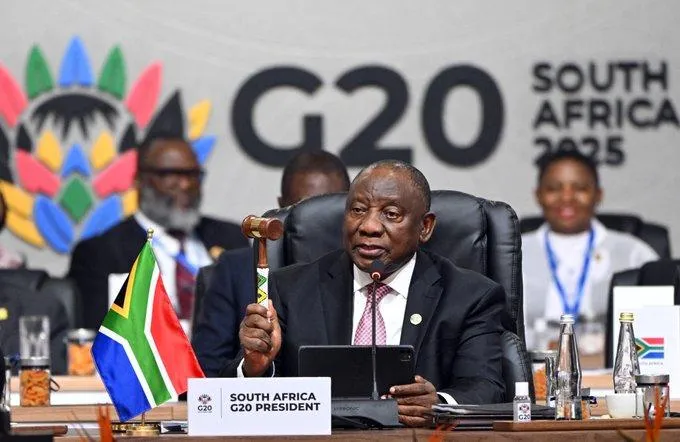
The article, written by South African activist Gillian Schutte, critiques the superficial optimism on social media following South Africa's participation in the G20 summit, where influencers hailed it as a success without addressing underlying structural issues like extreme inequality, youth unemployment, and economic dependency. It argues that such celebratory narratives lack theoretical depth and obscure how the G20 primarily consolidates a global financial system that advances Western industrial and geopolitical interests, binding developing nations like South Africa to policies favoring multinational capital. Key pressures on South Africa included accelerating decarbonization on European timelines, adopting blended finance that shifts risks to the public, expanding carbon-credit markets, privatizing strategic infrastructure, aligning with US/EU digital standards that undermine digital sovereignty, and enforcing fiscal austerity despite its harmful effects on employment and state capacity. These decisions, often made in bilateral and ministerial sessions rather than the public summit, narrow policy space, increase debt through loan-based climate finance, exploit strategic minerals with limited local beneficiation, and reinforce foreign control over energy, data, and maritime sectors. The article highlights the BRICS bloc's lack of unity— with India aligning with the US, Brazil prioritizing investments, Russia sanctioned, China acting independently, and South Africa constrained by dependencies—failing to challenge the G7-dominated agenda. Influencers are faulted for reproducing donor rhetoric, turning concepts like sovereignty, land return, and decolonization into performative slogans rather than material analyses, which weakens public political literacy and encourages acceptance of externally imposed terms. South Africa's longstanding constraints, including land dispossession, multinational mineral dominance, import reliance, and collapsing state capacity, are exacerbated rather than resolved by G20 participation. The piece, quoting Professor Isaac Shai, warns against 'misguided jingoism' that celebrates oppression, urging a critically aware public to transform rhetoric into substantive sovereignty and economic change, emphasizing that without such understanding, the country remains trapped in dependency.